• You're one step from joining Hand Tools Forum – Reviews, Techniques & DIY Applications.
    Create a free account to post, follow threads, and never miss an update.  Sign up free →

Replacing tree saw blade handle

Arthur

New member
Joined
Aug 4, 2025
Messages
4
1000005221.webp

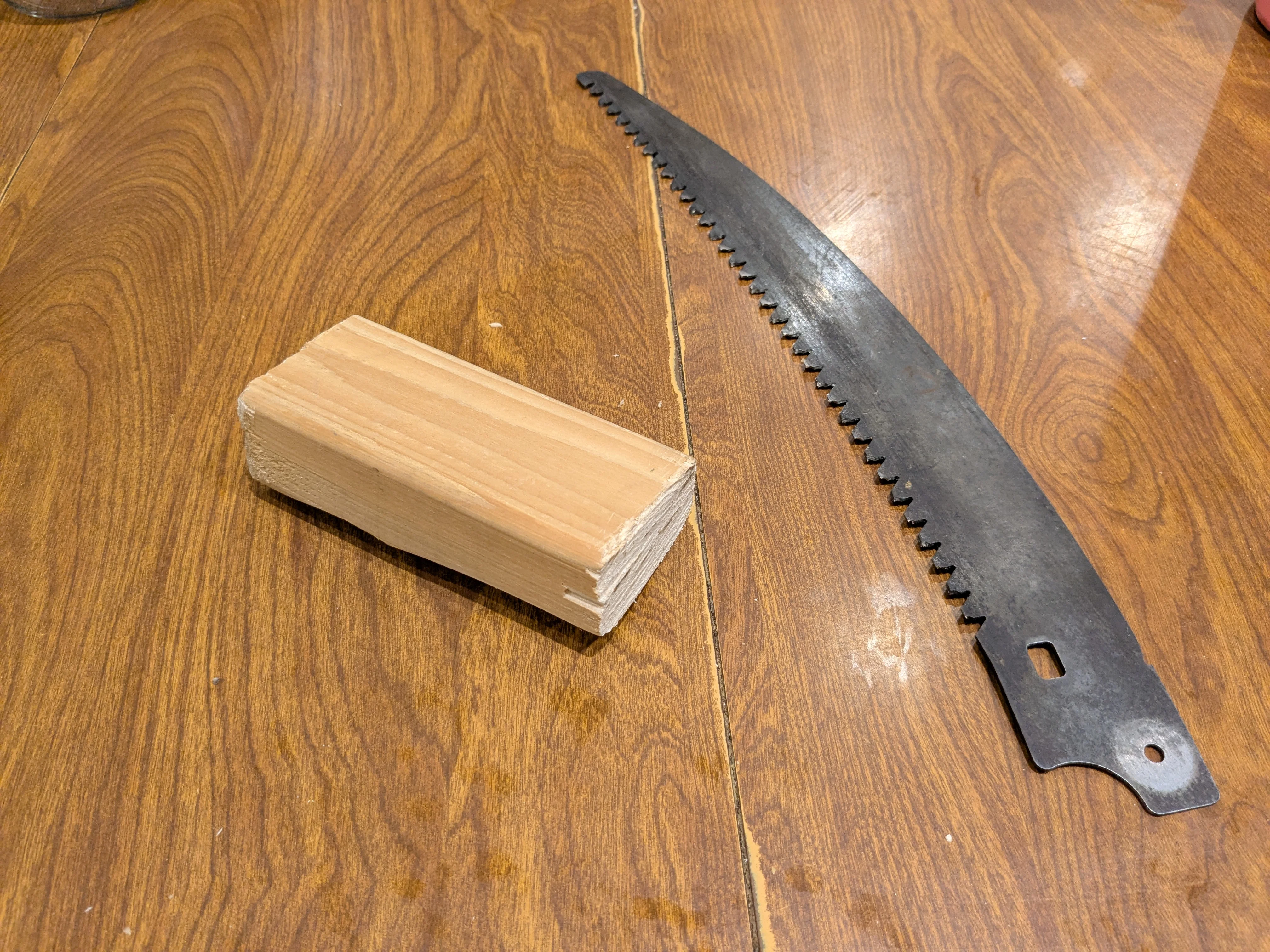
Hi everybody, I have this tree saw blade that is missing a handle and I'm trying to put a handle on it but I'm pretty new to woodworking and I'm not sure what I need for this project. I saw online that people use a saw nut or a split nut for fastening handles on hand saws. I see this saw has has a circular ring that looks like it used to have a washer attached to it. Also there is a square hole which I don't know what the purpose is for. I was thinking of carving a piece of wood to a handle shape then drilling a hole and cutting a slit to slide the saw in. If anyone can help me with what these parts are called and also offer some ideas on how to put a handle on this saw, it would be greatly appreciated. Thank you in advance!
 
The blade you have is a pruning saw blade, which is why it has that curved shape and aggressive teeth.
The circular ring and the square hole are where the handle attaches.
So the square hole is for a carriage bolt or a special saw bolt with a square shoulder that prevents it from spinning when you tighten the nut. The circular hole is for the corresponding nut or a washer/nut combo.
For your idea about the handle, you can cut a slot for the blade to slide into, then drill holes for the bolt and screw holes to keep the handle from splitting.
You can get a couple of saw nuts and bolts for a few bucks, or you could even use a simple carriage bolt and nut from the hardware store.
Good luck, that seems like a great project to get into!!
 
That seems like a fun and rewarding project! I agree with @HandsOnNel that the square and circular holes are for attaching the handles but I'm leaning more towards a D-handle saw blade, though it's also typically used for pruning. Either way, I still agree that carving a handle and cutting a slit is a perfect approach for this. Just be sure to find some decent handle stock. A hardwood like maple or oak would be a good choice because it's strong and will hold the saw blade securely! You'd also want to trace the tang of the saw blade onto the wood to get the shape right before you cut the slit. After you've fitted the blade into the handle, you can drill the holes for the saw nuts. You can also buy saw nuts from specialty tool suppliers online.
 
I did a similar thing years ago. I wanted something longer than just a short hand held device but also for reaching things a bit higher up but not pole saw length. What I used was an ax handle. Worked perfectly. Great for pruning lower branches and not having to drag out a step ladder. Been using for over 20 years now.
 
I did a similar thing years ago. I wanted something longer than just a short hand held device but also for reaching things a bit higher up but not pole saw length. What I used was an ax handle. Worked perfectly. Great for pruning lower branches and not having to drag out a step ladder. Been using for over 20 years now.
That's a great idea! We have pruning saw on a pole already and then this one. The length in between is always awkward. That ax handle is a clever solution
 
The blade you have is a pruning saw blade, which is why it has that curved shape and aggressive teeth.
The circular ring and the square hole are where the handle attaches.
So the square hole is for a carriage bolt or a special saw bolt with a square shoulder that prevents it from spinning when you tighten the nut. The circular hole is for the corresponding nut or a washer/nut combo.
For your idea about the handle, you can cut a slot for the blade to slide into, then drill holes for the bolt and screw holes to keep the handle from splitting.
You can get a couple of saw nuts and bolts for a few bucks, or you could even use a simple carriage bolt and nut from the hardware store.
Good luck, that seems like a great project to get into!!
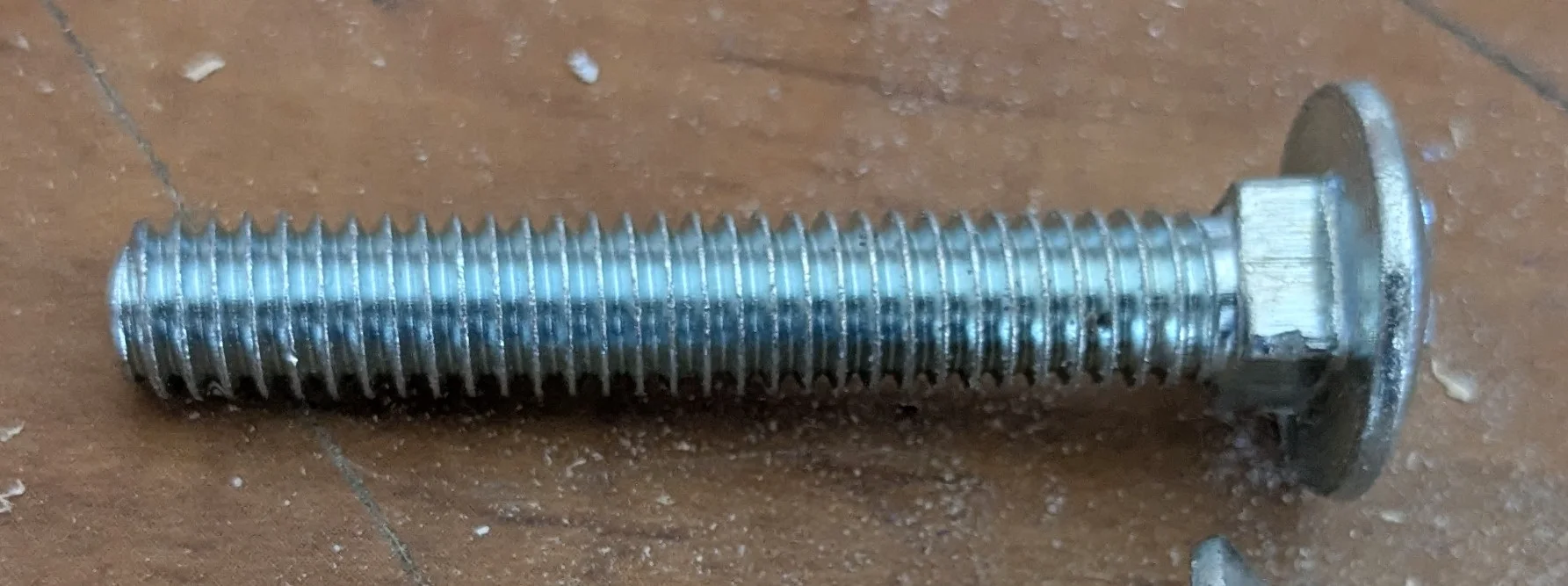
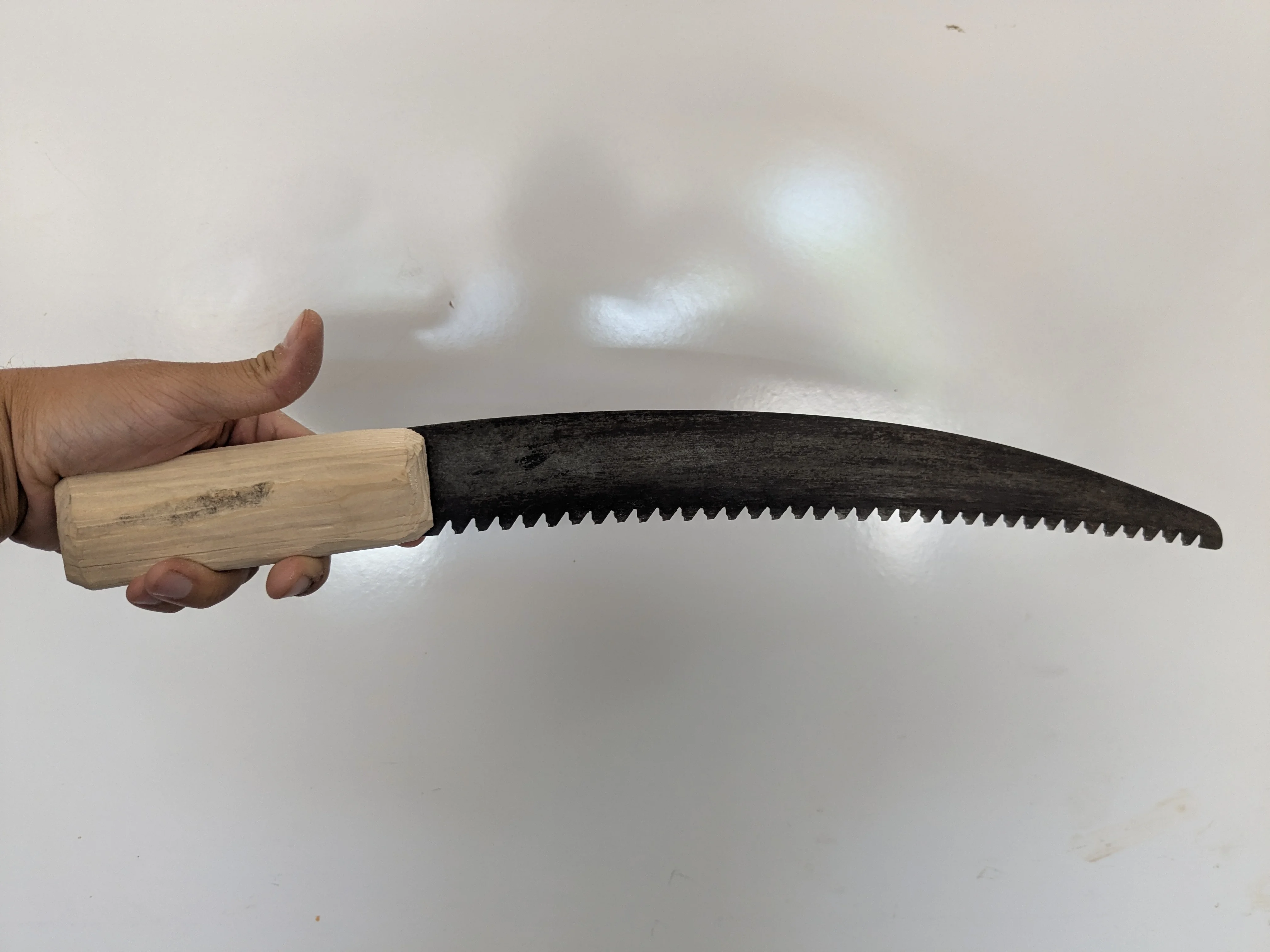
Thank you for all your help and advice! I cut the slit and it looked okay but there isn't much space in between the carriage bolt and the saw teeth to work with. I used some bolts I found in my dad's stash of bolts. I am not sure about how to drill these holes correctly. So should I first drill a pilot hole and then drill the width of the bolt, including the threads? Then after that would I need to drill the width and depth of the nut on one side and then the depth of the head and washer (and width of the washer) on the other side to have a countersink? If that is right, it makes sense for the round hole. I don't really get how this carriage bolt works though. I know the square has to go through the hole but I don't know how deep it has to go. In addition to the above, do I also drill a hole for the width and depth of the square? I feel like I need to get a bolt with a longer square. I actually already messed up that handle in this picture so I need to start over again. Thank you again for all your help!
 

Attachments

  • PXL_20250809_182359763.webp
    PXL_20250809_182359763.webp
    340.2 KB
  • PXL_20250809_184305329~2.webp
    PXL_20250809_184305329~2.webp
    115.6 KB
That seems like a fun and rewarding project! I agree with @HandsOnNel that the square and circular holes are for attaching the handles but I'm leaning more towards a D-handle saw blade, though it's also typically used for pruning. Either way, I still agree that carving a handle and cutting a slit is a perfect approach for this. Just be sure to find some decent handle stock. A hardwood like maple or oak would be a good choice because it's strong and will hold the saw blade securely! You'd also want to trace the tang of the saw blade onto the wood to get the shape right before you cut the slit. After you've fitted the blade into the handle, you can drill the holes for the saw nuts. You can also buy saw nuts from specialty tool suppliers online.
Thank you for your helpful tips!
 
Absolutely, begin by drilling a pilot hole, and then enlarge it to fit the bolt. The square just needs to be deep enough to grip and prevent any spinning.
 
I don't really get how this carriage bolt works though.
When working with carriage bolts, just make sure the square part sits flat, so the bolt doesn't spin around. If you're using soft or thin stuff, a longer square might be better. And hey, sometimes starting over is the way to go.
 
Back
Top